This project explores how misinformation spreads in a digital landscape shaped by AI and social media. As news consumption becomes fast and reactive, credibility is often unclear and easily amplified through sharing. This raises the question of how we might better support people in evaluating information in the moment.
Timeline
10 Weeks
Role
UX Researcher and Designer
Skills
Misinformation spreads rapidly across social platforms where news is experienced through fast-moving content like videos, podcasts, and feeds. Information is consumed quickly, but source clarity is often missing.
Sharing and reposting amplify this, allowing content to spread based on reaction rather than accuracy. This highlights a gap in how easily people can evaluate what they are seeing, and an opportunity to better support real-time understanding.
How Might We…
make fact-checking faster, easier, and more integrated into young adults’ everyday media habits so that they are more confident and informed in the news they acquire online?
Understanding The user
Young adults today primarily encounter news through social media platforms like TikTok, YouTube, and podcasts rather than traditional sources. Much of this exposure is passive, with users coming across information while scrolling or consuming other content, rather than actively seeking out news.
This means information is often taken in quickly, without clear context around where it comes from or how reliable it is.
Current Trends In News Consumption
News consumption has shifted heavily toward social platforms. According to Pew Research Center, about 53% of U.S. adults report getting news from social media, showing how central these platforms have become in everyday information consumption.
From 2020 to 2025, the number of U.S. adults getting news from TikTok grew from 3% to 20%, with 55% of TikTok users reporting they regularly see news on the platform (Pew Research Center). Only 42% of users say news comes from mainstream organizations, while the majority point to influencers, alternative media, or political figures as sources. This reflects a shift toward less traditional and less regulated information sources.
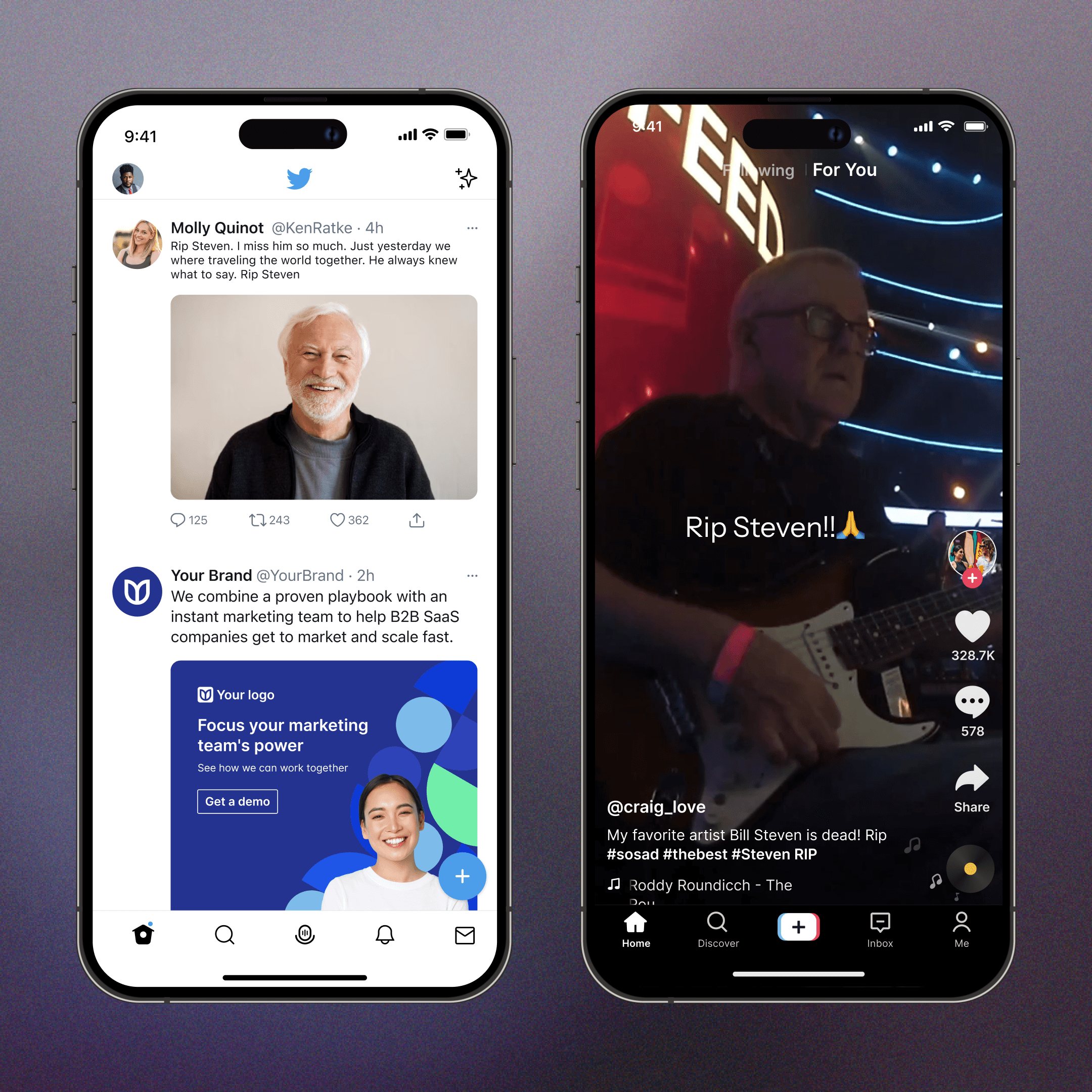
Overall, people are more likely to encounter news passively rather than actively seek it out, meaning information is often consumed without clear context or verification. Below are two examples from social media where users encountered false information.
Paint Points
Passive news consumption makes it harder for users to critically evaluate information
Lack of context in the moment makes it difficult to understand and assess content
Sources are almost never listed unclear or inconsistent, making credibility difficult to judge
Sharing and reposting allow misinformation to spread quickly based on engagement
Working as a group, we each created concept directions aligned with the How Might We, exploring different ways to address misinformation in everyday media use. We tested these ideas with users to better understand their habits, trust behaviors, and which concepts resonated most.
This phase focused on future thinking, using feedback to guide which directions felt most impactful. Below are some of the examples of the concept explorations.

AR Glasses Provide Immediate Feedback and Source Information

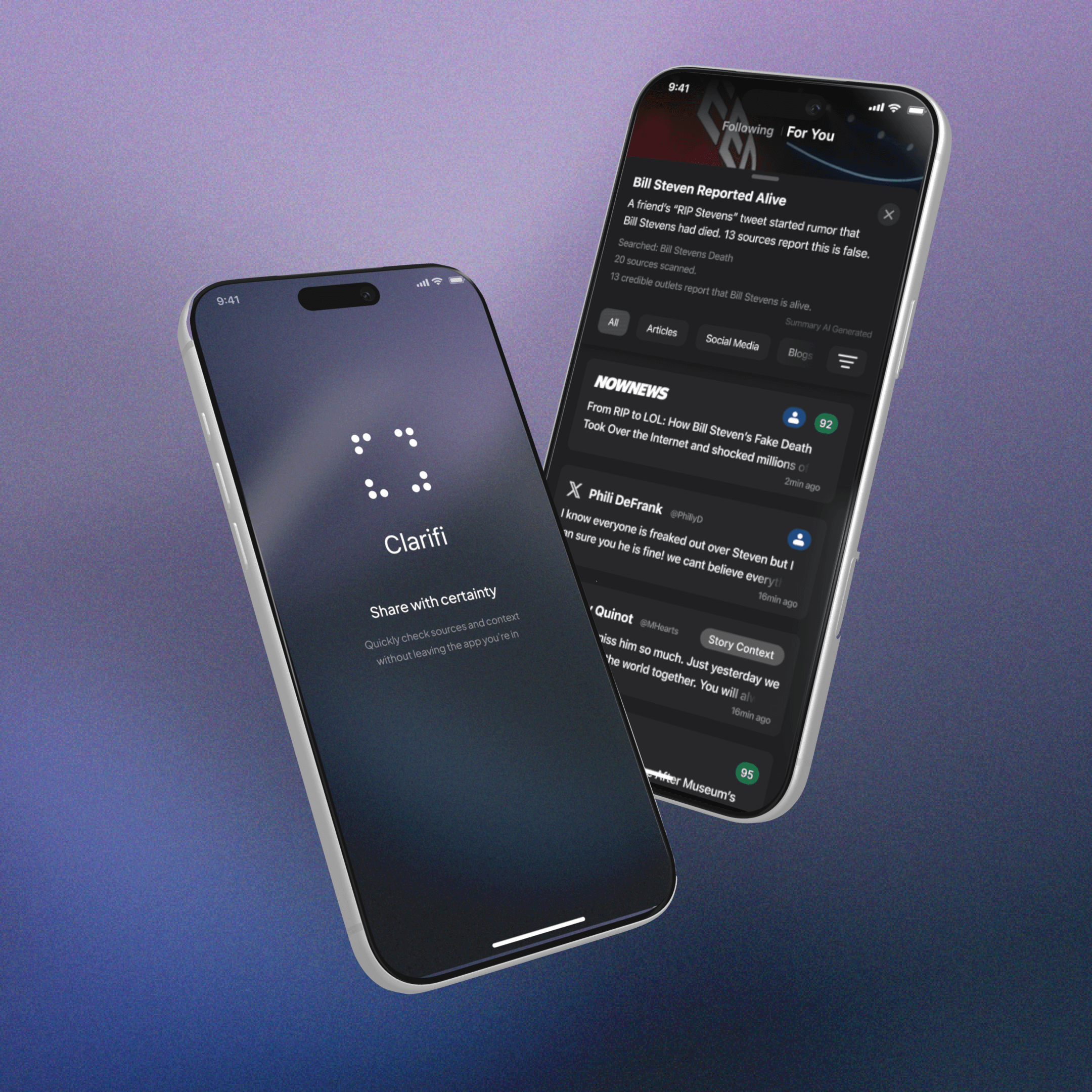
Quickly check sources and context without leaving the app you’re in

Smartwatch Companion for Quick Fact Checks

Connected Home Speaker for Passive Monitoring
Key Insights
01
People are unlikely to leave their current app to verify information when they’re in the middle of scrolling
02
Users want support in verifying information, but still want to make their own judgments
03
Fast content favors reaction over evaluation, creating a need for in-the-moment support
04
Users are more receptive to information at moments of action
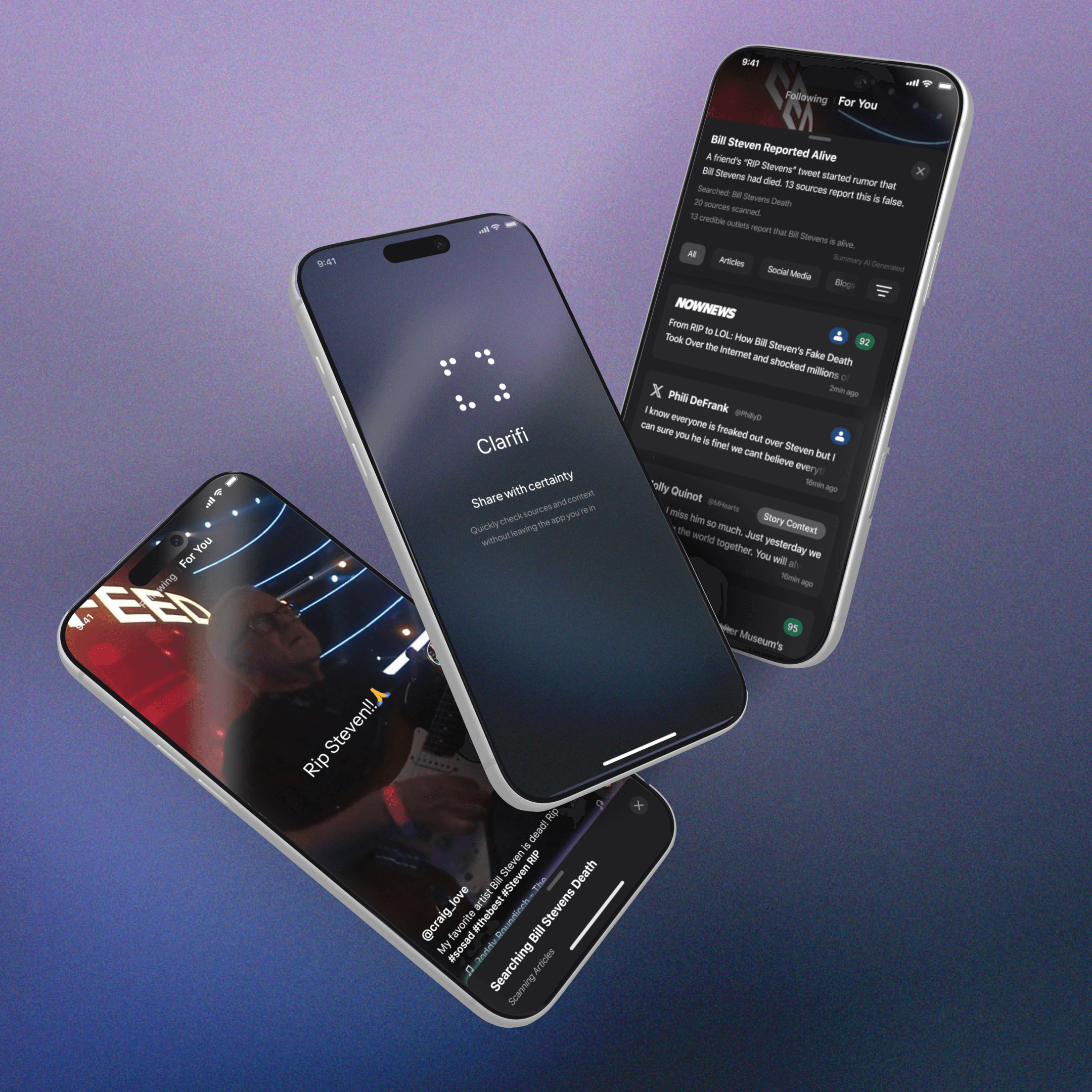
The concept introduces a share sheet–based tool that supports users at the moment they decide to share content. Instead of requiring users to leave their current app or interrupt their experience, it integrates directly into the sharing flow to provide quick access to source information, claim lookups, and contextual insights.
By meeting users at a natural decision point, the system enables faster, more informed sharing without disrupting behavior.
SHare with Clarifi
Rather than interrupting scrolling or requiring users to verify information elsewhere, the tool surfaces lightweight options directly within the share sheet.
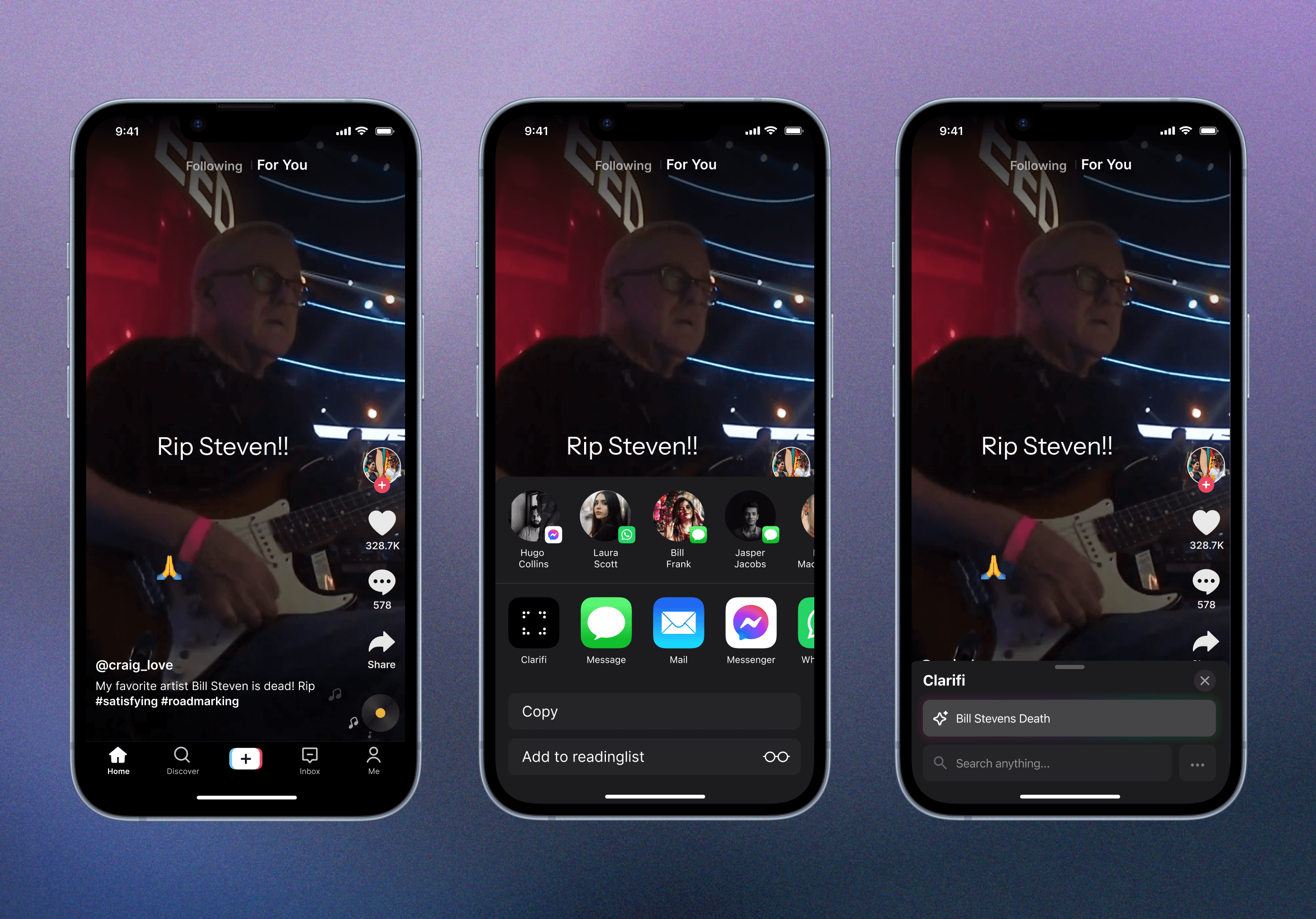
This keeps the experience fast and familiar, while still introducing an opportunity to evaluate the content. The following screens show how this interaction appears within the sharing experience
Surfacing Accessing Context and Source Information
After selecting a claim or topic, the system surfaces a quick, scannable view of relevant information, including source credibility, key summaries, and related media that help users understand the broader context.
Rather than presenting a single answer, the system emphasizes connections across sources, allowing users to explore and interpret information themselves. This supports a balance between guidance and autonomy, helping users feel informed without being told what to think.
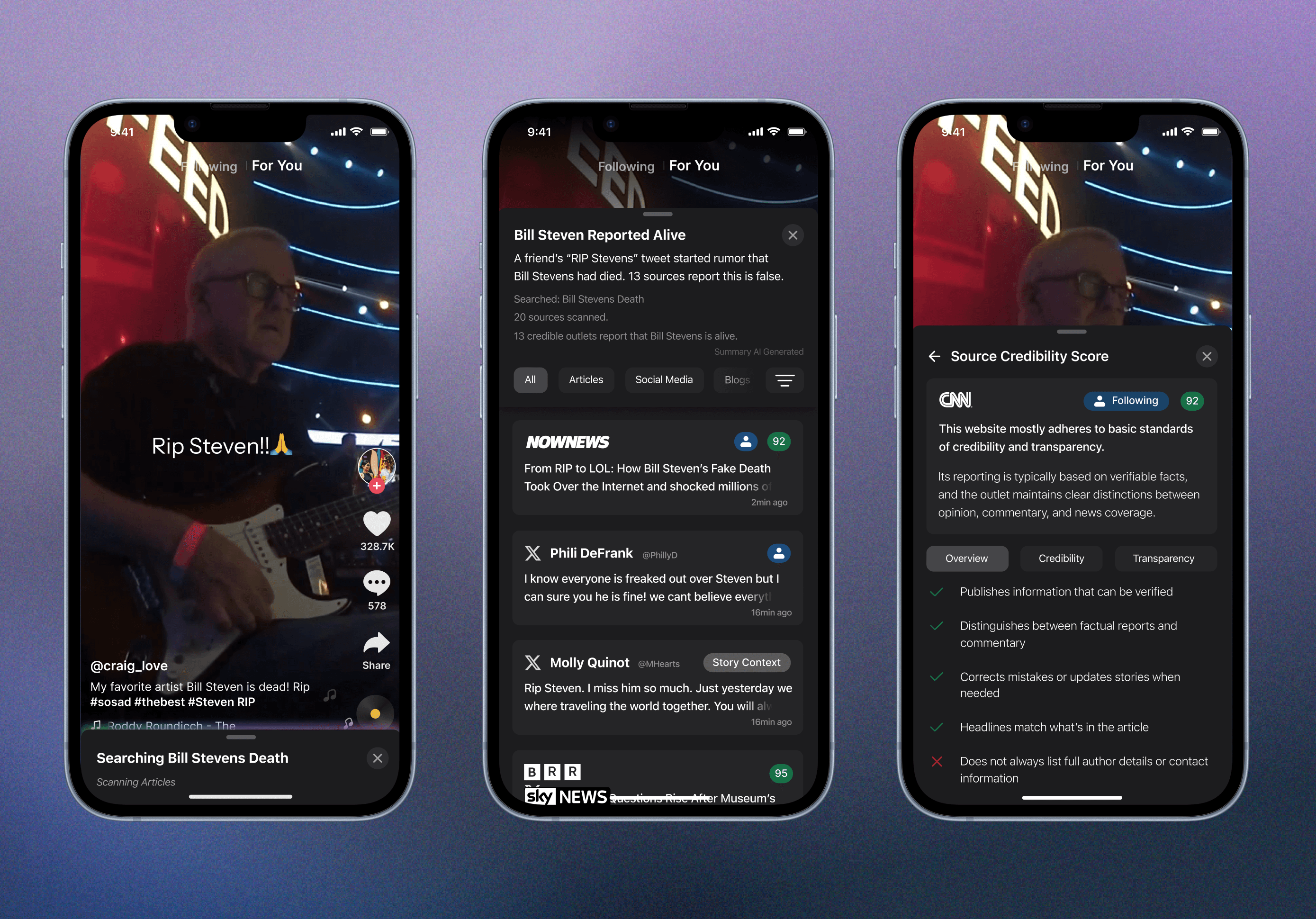
This concept extends beyond a single interaction in the share sheet into a more connected experience over time. While the share moment introduces lightweight, in-the-moment evaluation, a broader system could support ongoing awareness by allowing users to follow sources, track topics, and revisit information they’ve engaged with.
This builds on the same ideas of quick access, low disruption, and user control, and expands into a more personalized layer that helps users stay informed on what matters to them over time, not just in a single moment.

Lizzy O'Brien Case Study — 2026
CLARIFI